

Natural Coral in American Indian Jewelry: A Material History
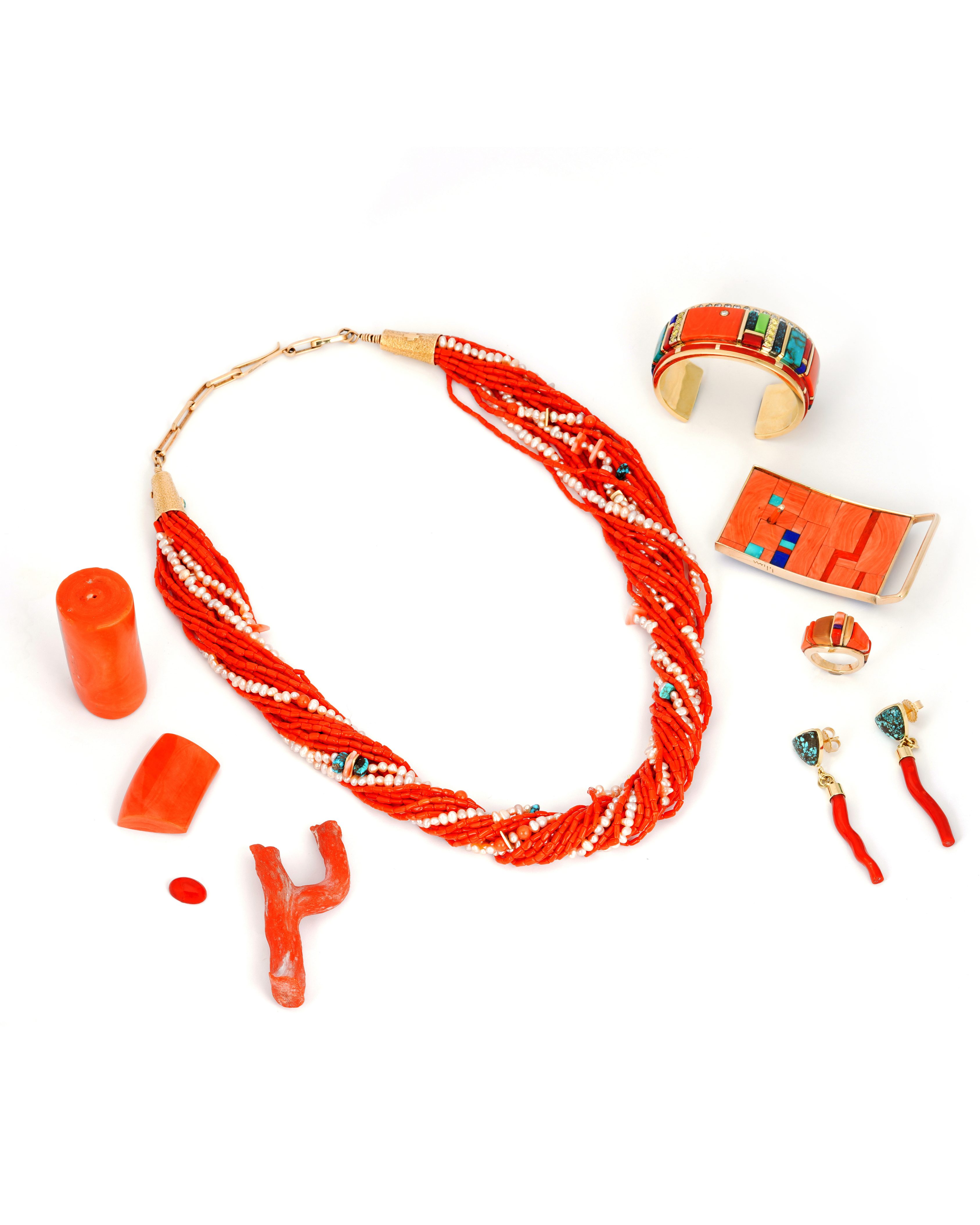
Natural coral has become one of the most recognizable materials in American Indian jewelry. Valued for its rich red hues, smooth finish, and organic origin, coral has played a vital role in Southwestern jewelry design for over a century.
What Is Natural Coral?
Unlike gemstones or minerals, coral used in jewelry is the calcified skeleton of marine invertebrates. The most prized variety—precious coral (Corallium rubrum)—is harvested from the Mediterranean Sea. It is compact, durable, and takes a high polish, making it ideal for fine jewelry. Coral’s natural colors range from deep red and orange to soft pinks, and its branching growth pattern ensures every piece is one of a kind.
Coral’s Introduction to Native Jewelry
Coral is not native to the American Southwest. It entered Native jewelry traditions in the late 19th to early 20th century, when Mediterranean coral was introduced through trade networks by European and American dealers. Southwestern artists soon began incorporating coral into their silverwork.
By the 1920s and 1930s, coral was a widely used material in Native jewelry. Its density made it well-suited for cutting into cabochons, mosaic inlay, and fine beadwork. Coral’s vivid color also complemented turquoise, creating visually striking designs that would become hallmarks of the region’s jewelry tradition.
From Raw to Refined
Transforming coral from a natural form into finished jewelry is a labor-intensive process. Artists begin with raw coral—often in branch or rod form—and use lapidary techniques to shape, cut, and polish it. The result might be a bold cabochon, a row of inlay, or a carefully drilled bead.
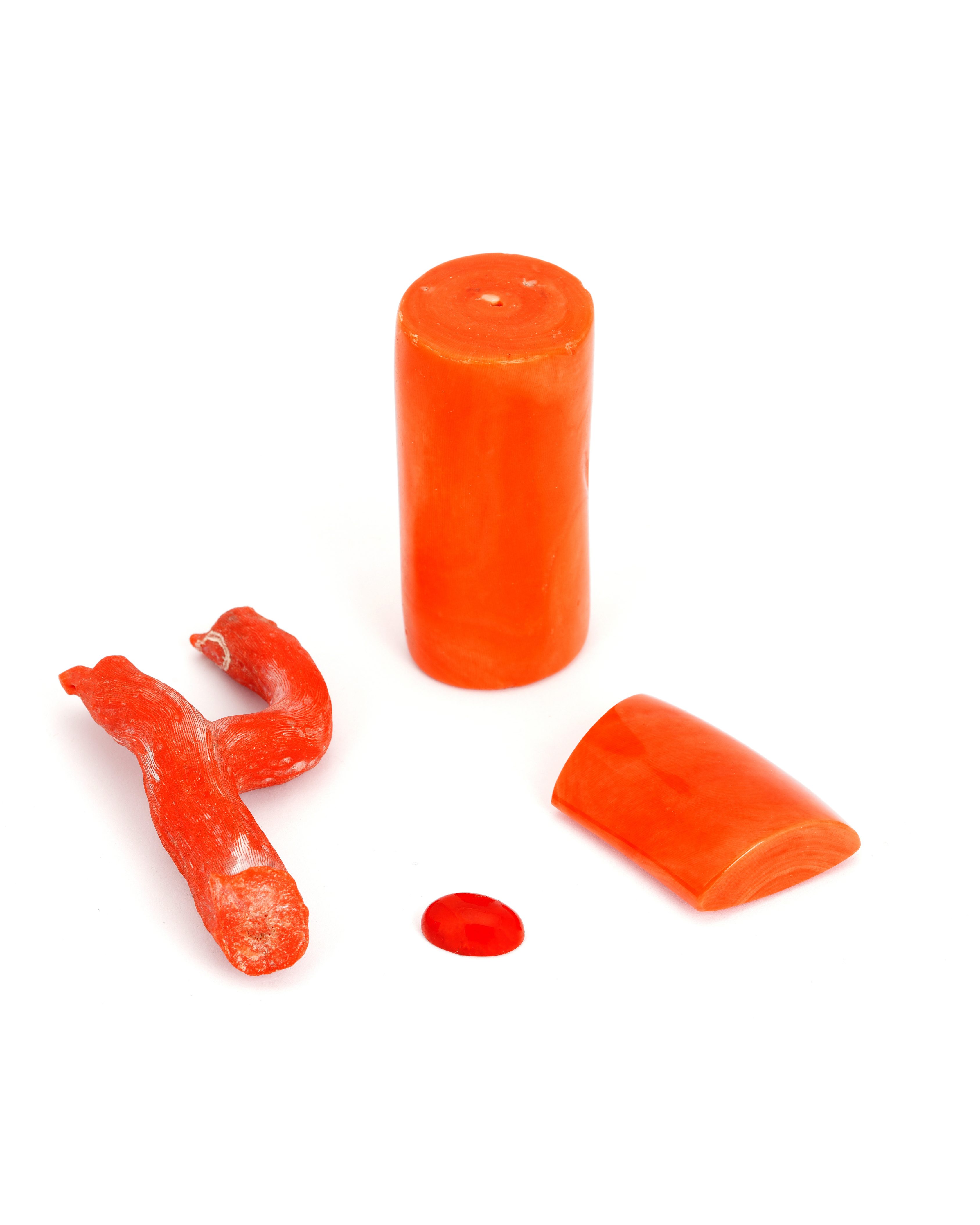
1. A Few Different Types of Coral Used in Native Jewelry
-
Angel Skin Coral (pale pink)
-
Deep Water Coral (lighter or orange tones)
-
Mediteranian Coral (deep red to reddish-orange color)
2. Historic Trading and Coral’s Popularity
-
Coral entered the Southwest primarily after the arrival of Spanish and Mediterranean traders.
-
By the 1920s, coral jewelry was highly sought after in trading posts, which promoted pieces made with silver, turquoise, and coral together as collectible items for East Coast and European buyers.
-
Coral became a “status material” for Native artists because it was rare, expensive, and non-local, giving it special prestige.
3. Technical Challenges of Working with Coral
-
Coral is softer than many gemstones (3–4 on the Mohs hardness scale).
-
It requires delicate handling during cutting and polishing to avoid cracking.
-
Coral must be protected from acids, chemicals, and high heat.
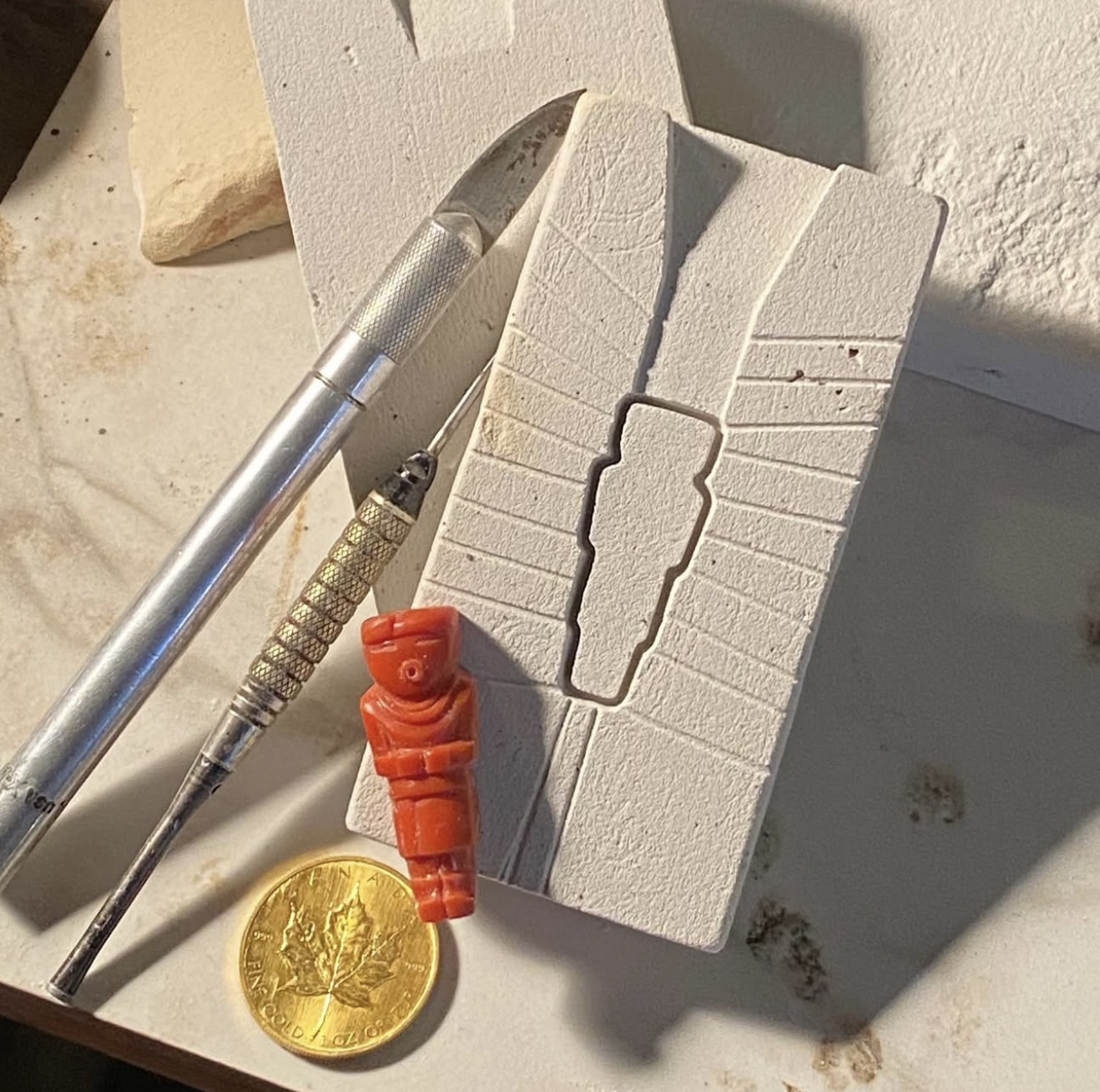
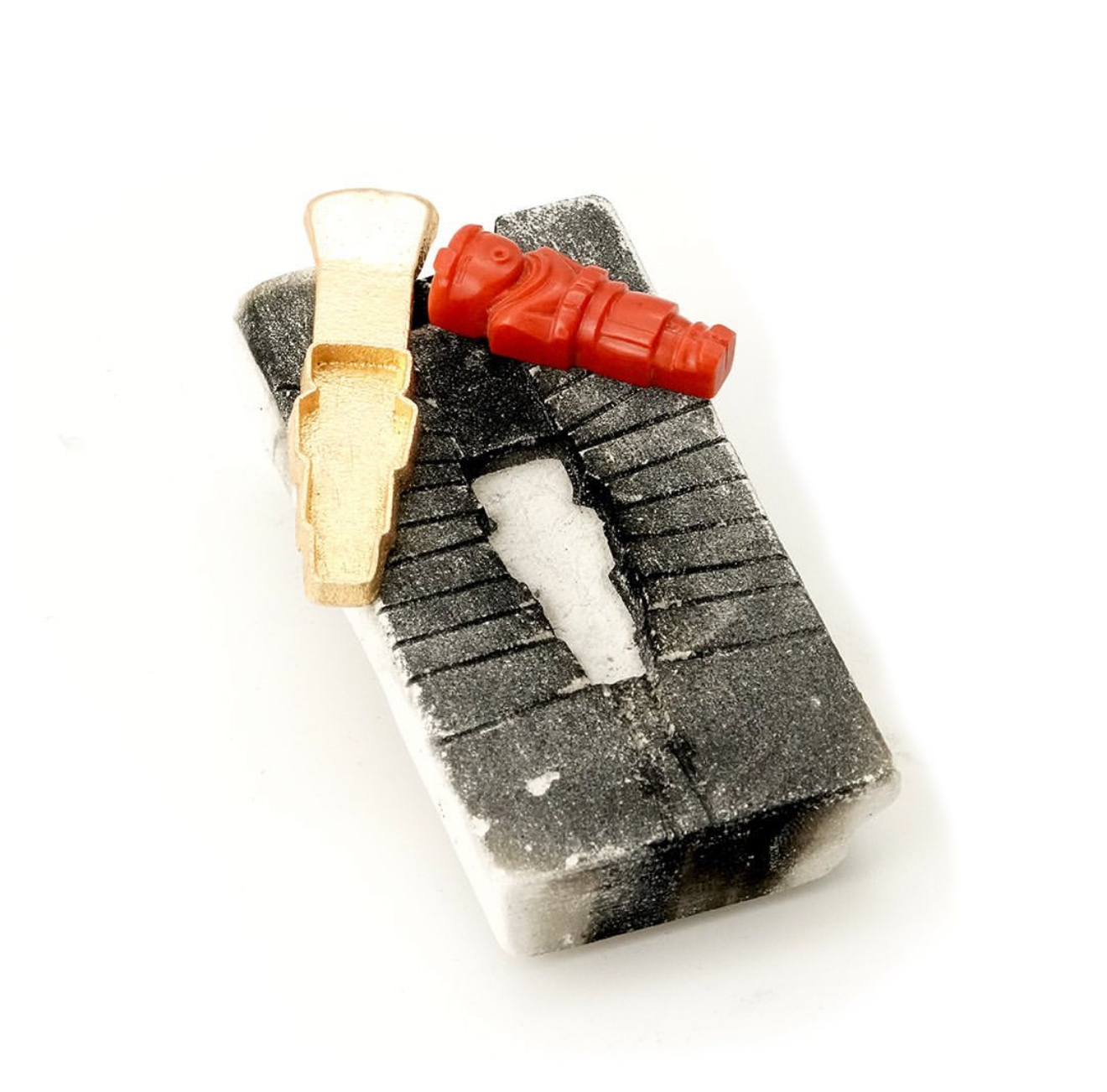
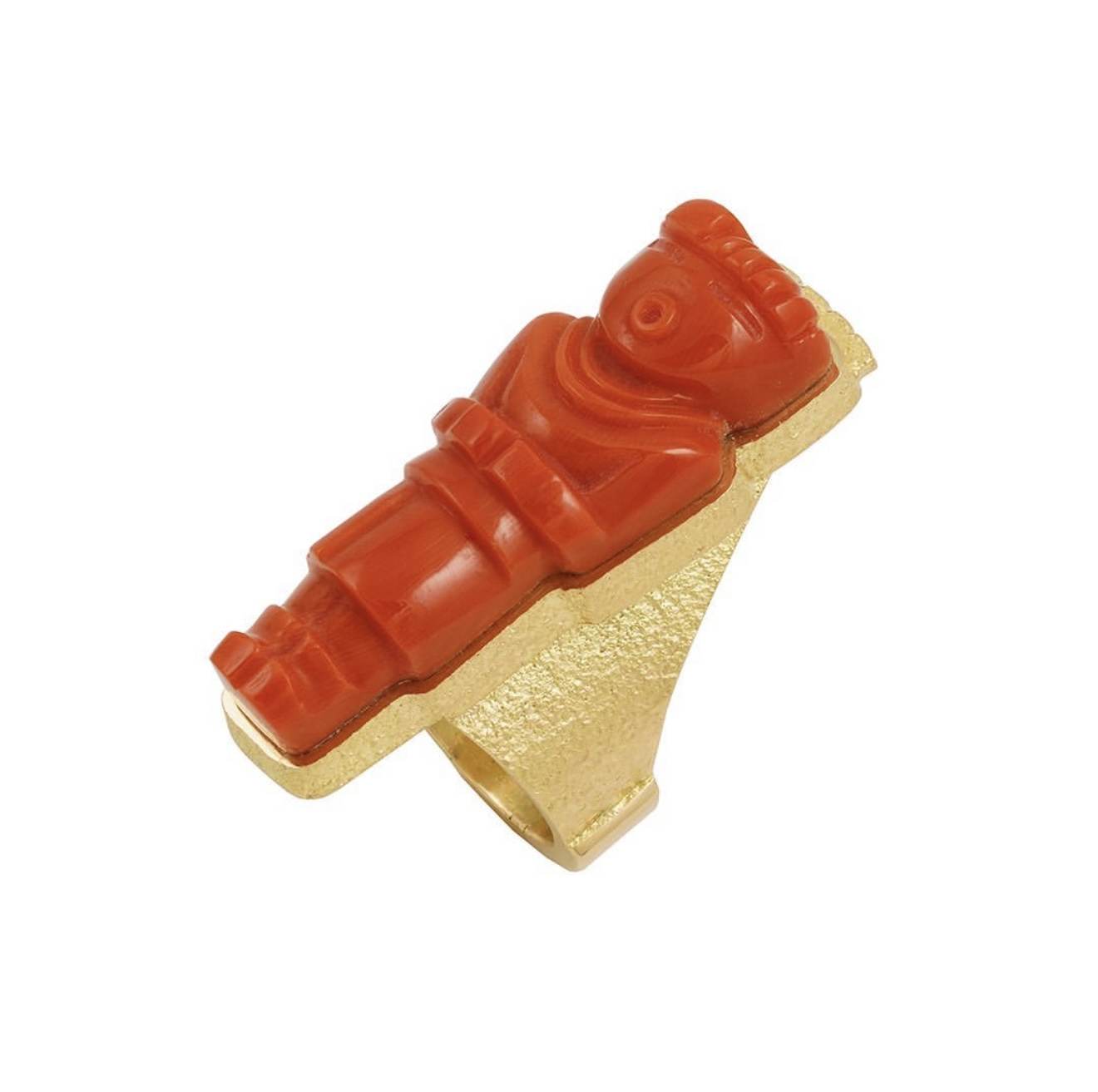
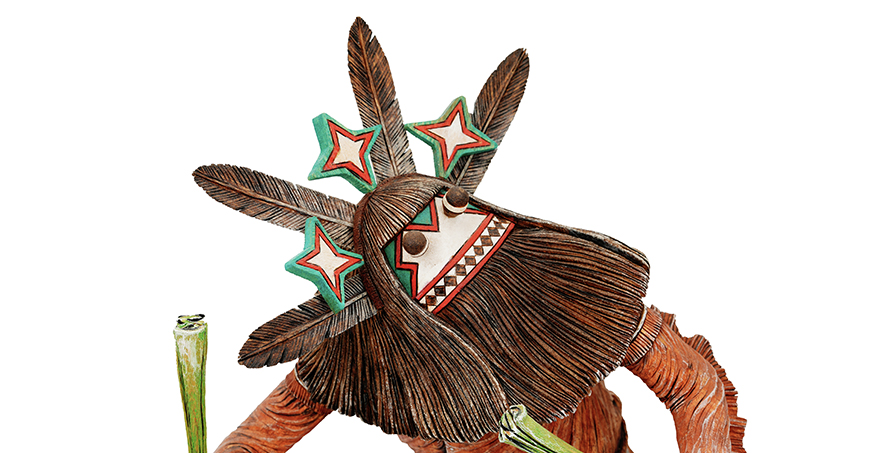
These images feature a hand-carved piece of coral, set into a tufa cast gold ring by Charles Supplee.
Wearable Art
This is the finished ring, featuring a hand-carved Kachina figure set in tufa cast 18k gold. The textured gold contrasts beautifully with the polished coral hand-carved stone, showcasing Supplee’s signature blend of tradition and precision. This was one of the last pieces he created for Faust Gallery before his passing. (NFS)
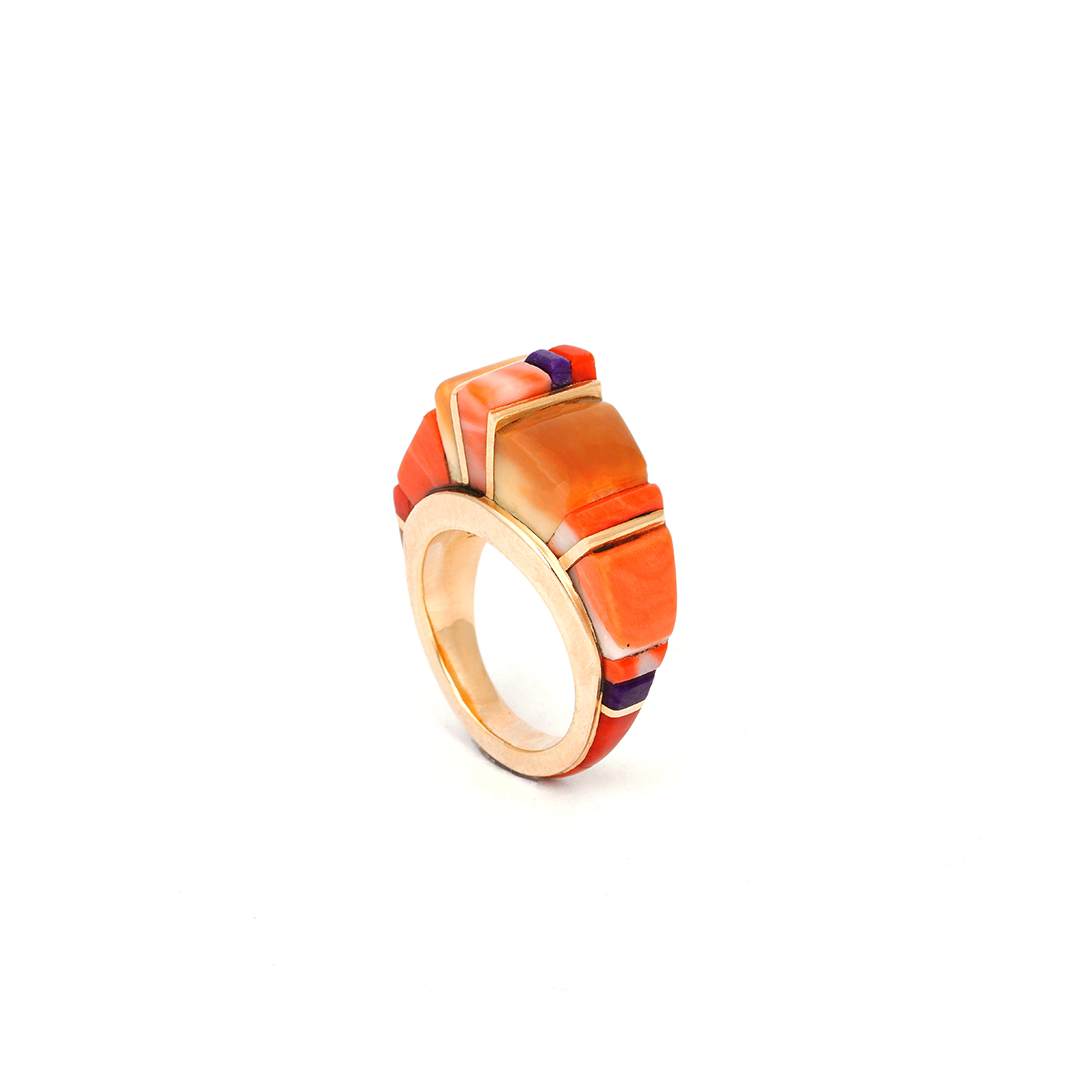
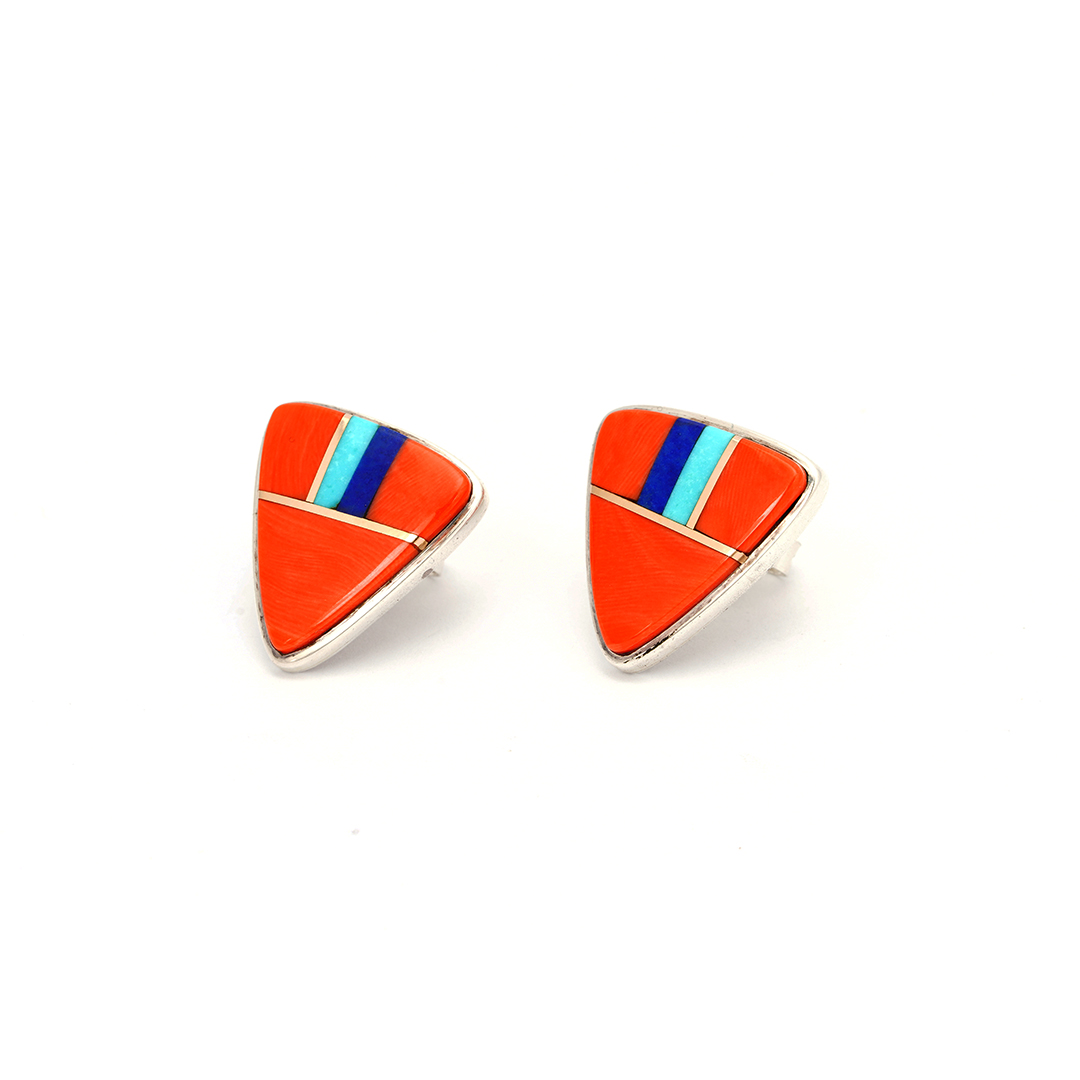
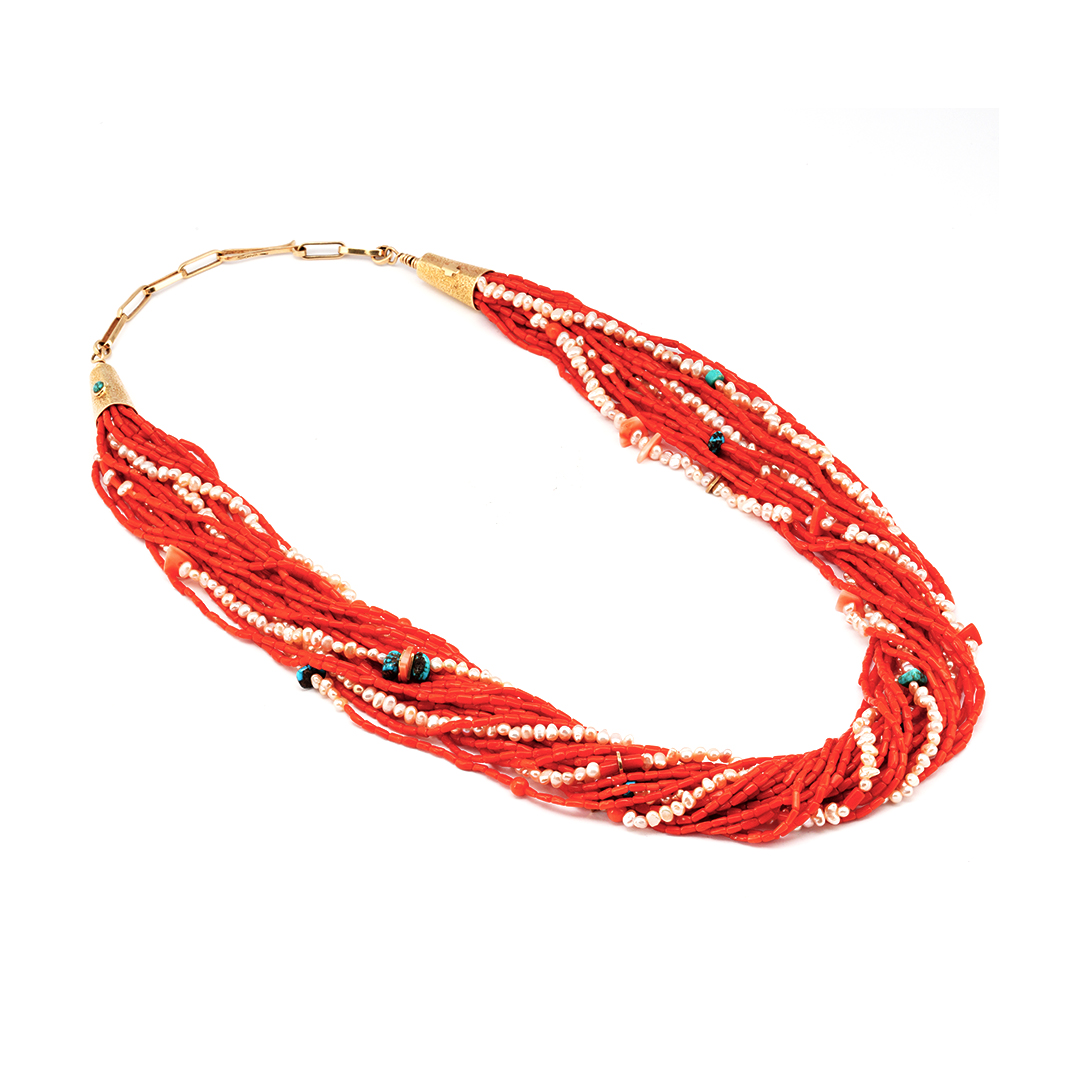
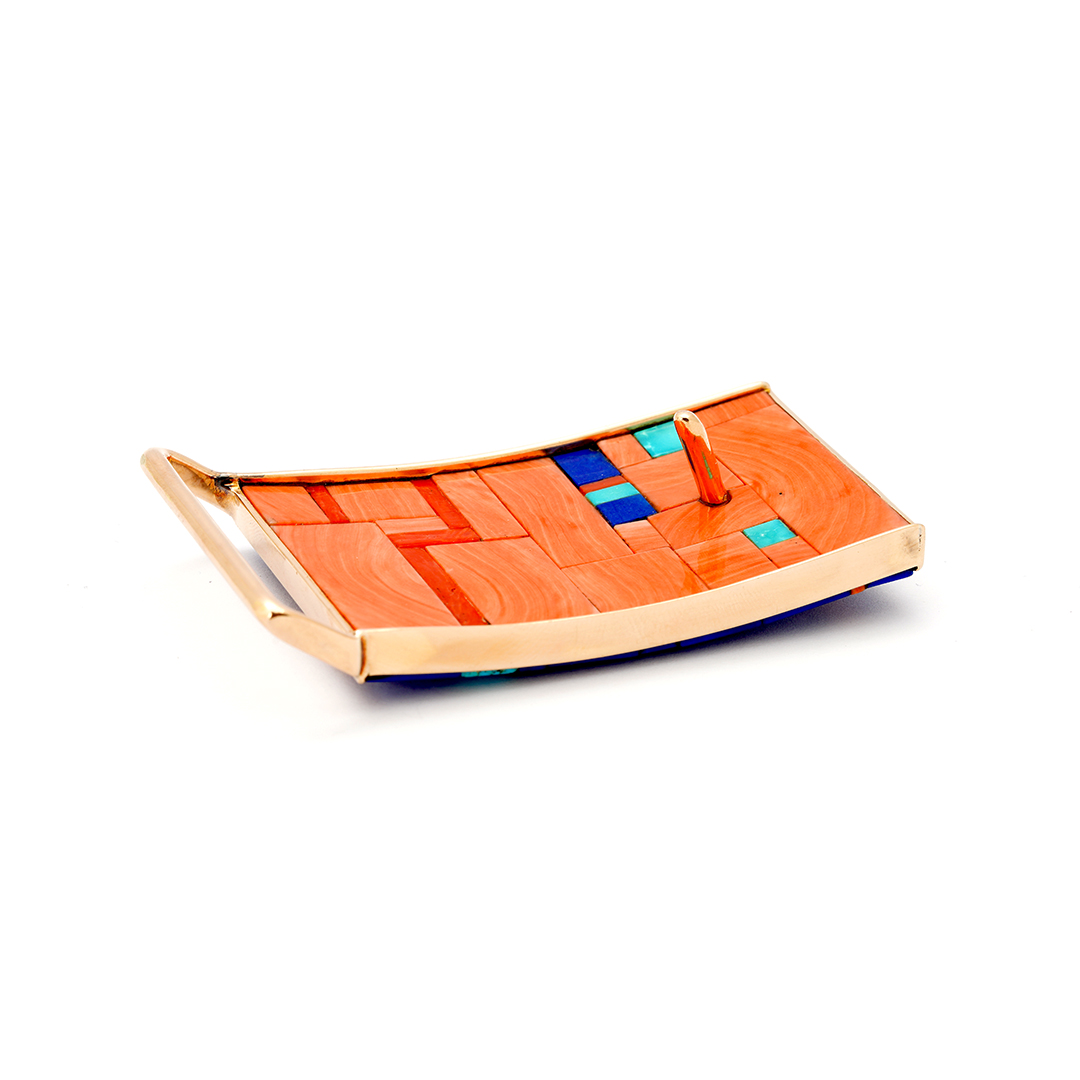
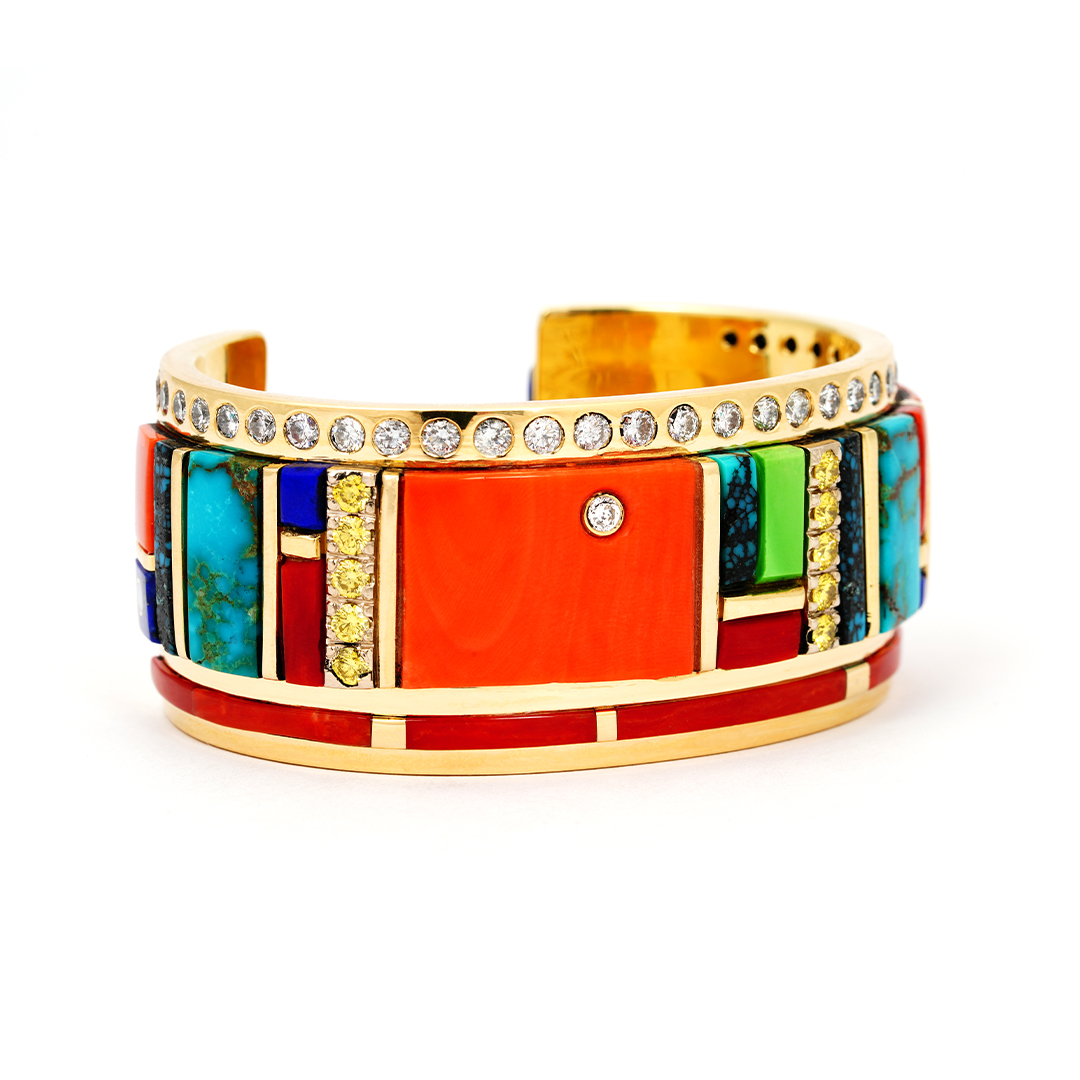
Featured Coral Jewelry
Santa Fe
150 W Marcy Street,
Santa Fe, NM, 87501, Suite #103
(480) 200-4290
Scottsdale
7100 E Main Street,
Scottsdale, AZ, 85251, Suite #4
(480) 200-4290